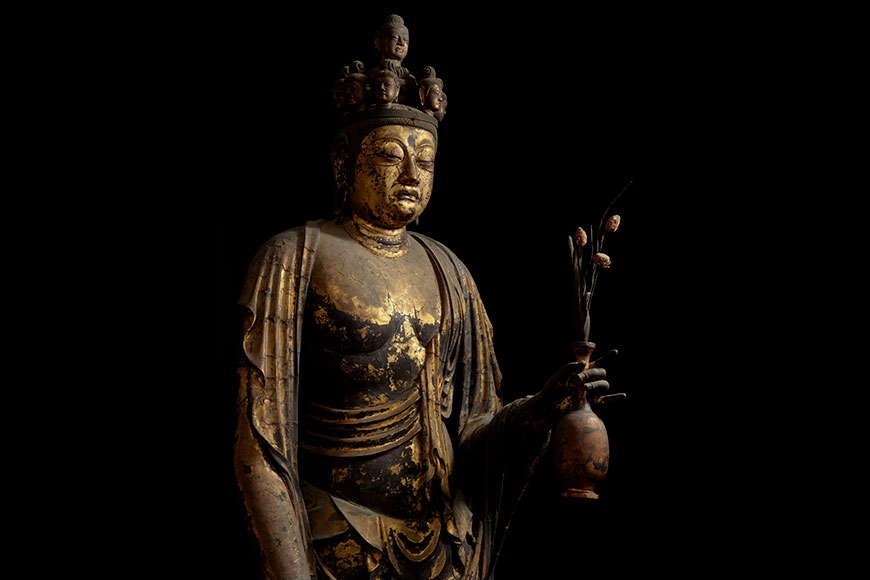


Sacred Treasures from Ancient Nara: The Eleven-Headed Kannon of Shōrinji Temple
The Eleven-Headed Kannon (National Treasure) of Shōrinji Temple (Sakurai City, Nara Prefecture) is an impressive example of Buddhist sculpture created during the Tenpyō era (729–749) and a highlight of Japanese Buddhist art. The Eleven-Headed Kannon was housed at Ōmiwa Shrine in Nara's Sakurai City until the Edo period (1603–1868). Sakurai City is home to other Buddhist sites and statues, such as the Bodhisattva Jizō (National Treasure), which is now preserved at Hōryūji Temple. Ōmiwa Shrine was originally a Shinto shrine and has no main hall to house statues; instead its activities have long been based on a reverence for nature, in particular a local sacred mountain, called Mount Miwa. From the Nara period (710–794) onwards, the shrine was influenced by Buddhism, and a sub-temple (Ōmiwa Temple, later renamed Daigorinji Temple) was built and Buddhist statues were created there.