

Hagi Uragami Museum

©Hagi Uragami Museum
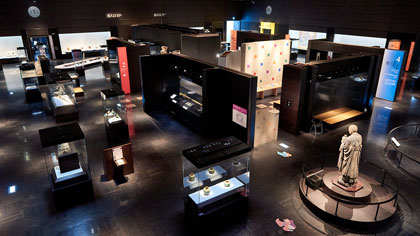
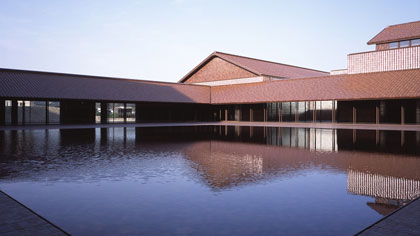
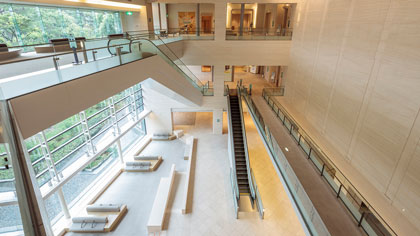
Hagi Uragami Museum, opened in 1996, was founded through the philanthropy of Toshiro Uragami (1926- 2020), a Hagi-born entrepreneur who generously contributed his extensive art collection, focused on ukiyo-e prints and East Asian ceramics. In 2010, an annex was added to promote the ceramic arts and crafts, specifically the 400 -year-old tradition of Hagi ware. Serving as a cultural hub, we have hosted diverse exhibitions, contributing to the aesthetic richness of Hagi, a town recognized as a UNESCO World Heritage Site. By expanding our art initiatives further, we aim to encourage interaction among people, actively engaging the community, fostering local vibrancy. Moreover, by leveraging the awards highlighted in the Michelin Green Guide Japan, we strive to advance cultural tourism for visitors worldwide.

©Hagi Uragami Museum
In the Special Selection Gallery, one carefully selected masterpiece from the museum's ukiyo-e collection is featured each month, allowing visitors to appreciate it in depth. This year, the focus is on works published by the renowned publishers Tsutaya Jūzaburō, also known as Tsutajū, and his successor, the second-generation Tsutajū.
In the Japanese Tea Room, various contemporary artists present installations that reinterpret the traditional tea room space through their own creative perspectives.
Exhibition Rooms 1 and 2 feature ongoing displays of ukiyo-e prints, East Asian ceramics, and contemporary pottery. The exhibitions change regularly by theme, allowing visitors to explore the appeal of these artworks from multiple angles.
The Ceramics Gallery specializes in ceramics and crafts, showcasing a wide range of works—from pre-modern ceramics and traditional crafts to cutting-edge ceramic art. It also introduces the 400-year history of Hagi ware through materials, artworks, and video presentations.
As part of the collection gallery, curators host talks and artwork explanations twice a month.

©Hagi Uragami Museum

©Hagi Uragami Museum

©Hagi Uragami Museum

©Hagi Uragami Museum

©Hagi Uragami Museum
Main works
The Seven Foibles of Young Women: The Telescope
The Japanese proverb Nakute nanakuse means that even those who seem to have no habits or quirks have at least seven. This print is part of a series illustrating seven such quirks as observed in women. Only two prints from the series are currently identified by subject: the Telescope and the Ground Cherry.
There is no description, so the nature of the quirk is interpreted from the scene. In this case, a woman using a telescope while out on a walk implies a habit of casual sightseeing or an interest in exploring her surroundings. The composition is cleverly arranged, featuring two women and a few well-placed props hinting at a subtle story.
Although only two prints have been identified by theme, a total of three prints from the series are known to exist—held in the Grabhorn Collection and the Kobe City Museum. However, in recent years, the works in the Grabhorn Collection were sold to Lee Dirks. The artist's signature (Kakō) dates the works to Kansei 10 (1798) to Bunka 8 (1811).

DISH WITH THREE LEGS : Three-color glaze with stamped lotus flower design.
This piece is a shallow dish with a wide rim and three legs as its base. The interior is coated with white slip (a thin layer of liquid clay), onto which a hōsōge (imaginary floral pattern) is stamped, featuring lotus flowers and buds arranged in a circular motif (dan-ka) that radiates outward like rays.
A sancai (three-color) glaze of green, white, and yellow is applied over the design, while a deep cobalt blue glaze is used around the rim. The vivid, lively sancai colors are striking, and the contrast with the rich blue border creates a visually balanced composition. This dish is an outstanding example of Tang dynasty (8th century) sancai ware.

China. Tang dynasty, 8th century.
©Hagi Uragami Museum

China. Tang dynasty, 8th century.
©Hagi Uragami Museum
- The Thirty-six Views of Mount Fuji: Under the Wave off Kanagawa
- Actor Ichikawa Komazo Ⅲ as Shiga Daishichi
- Naniwa-ya Okita
- One Hundred Famous Views of Edo: Plum Garden at Kameido
- SQUARE FLASK WITH TWO HANDLES : Blue-and-white porcelain with rabbit and magpie design.
- Tea Bowl in Hagi Mishima Style, Titled “Shiiba”
- Miwa, Kyuwa (Kyusetsu X), Hagi Water Jar with Straw Hat-Shaped Lid, 1973
- Miwa, Jusetsu (Kyusetsu XI), White Hagi Flower Vase in the Shape of a Wooden Pail, 1965